

Introduction
In today’s fast-moving industrial world, efficiency and precision are no longer optional—they are essential. One of the most impactful innovations driving this transformation is the automated stacking crane. This advanced system has reshaped how warehouses, container terminals, and distribution centers operate by replacing manual handling with intelligent automation.
An automated stacking crane is not just a machine; it represents a shift toward smarter logistics. Businesses aiming to reduce operational costs while increasing speed and accuracy are increasingly adopting this technology. From large-scale shipping ports to high-density warehouses, the role of automation continues to grow.
What is an Automated Stacking Crane?
An automated stacking crane is a rail-mounted, computer-controlled system designed to store and retrieve goods automatically. It operates within a structured environment, typically moving along aisles between storage racks or container stacks.
Unlike traditional cranes that require human operators, this system uses software, sensors, and control units to perform tasks independently. It can precisely position loads, stack them efficiently, and retrieve them when needed—all without manual intervention.
The system is usually integrated with warehouse management software, allowing real-time communication and control. This ensures that inventory handling becomes seamless, accurate, and highly efficient.
Bio Table
| Attribute | Details |
|---|---|
| Name | Automated Stacking Crane (ASC) |
| Category | Industrial Automation Equipment |
| Industry Use | Warehousing, Logistics, Container Terminals |
| Function | Automated storage and retrieval of goods/containers |
| Technology | PLC, Sensors, AI Integration, WMS Software |
| Load Capacity | Lightweight bins to heavy containers (varies by type) |
| Movement | Horizontal, Vertical, Depth (3-axis motion) |
| Power Source | Electric-powered system |
| Operation Mode | Fully Automated / Computer Controlled |
| Accuracy Level | High precision positioning (millimeter-level) |
| Working Hours | 24/7 Continuous Operation |
| Safety Level | Advanced (sensor-based safety systems) |
| Maintenance | Requires skilled technical support |
| Cost Range | High initial investment, low long-term cost |
| Future Scope | AI-driven smart logistics & Industry 4.0 integration |
How It Works
The working principle of an automated stacking crane is based on coordinated motion and intelligent control. It moves in horizontal, vertical, and sometimes telescopic directions to access storage locations.
When a request is generated—either for storing or retrieving goods—the system receives instructions from a central control unit. The crane then navigates to the exact location, lifts or deposits the load, and updates the system instantly.
This entire process happens within seconds, ensuring fast turnaround times. The integration of sensors and positioning systems allows the crane to operate with high precision, even in complex storage environments.
Design and Structure
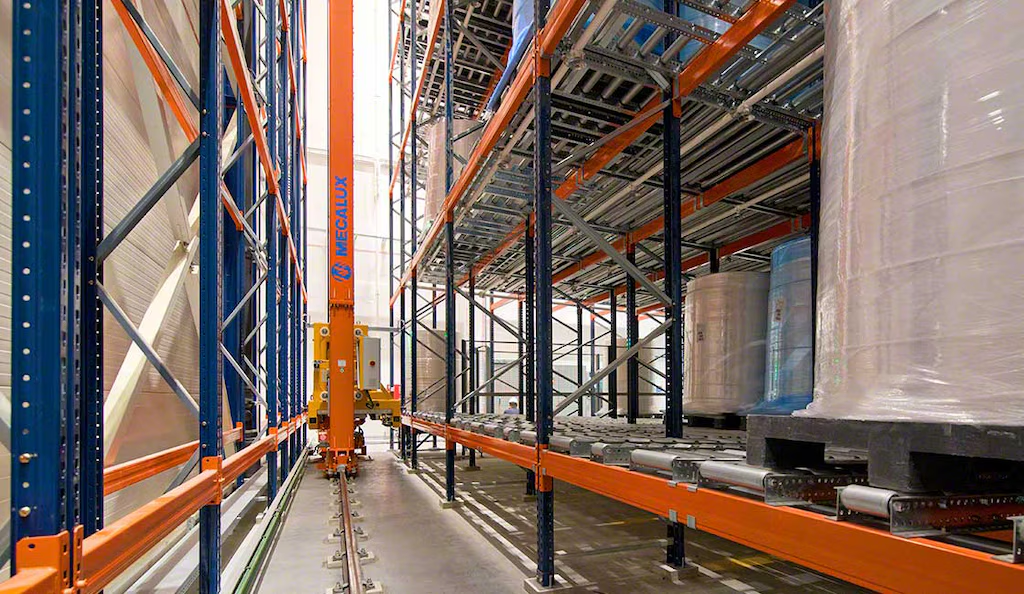
The structure of an automated stacking crane is engineered for stability, speed, and durability. It typically includes a mast, a carriage, and a load-handling device.
The mast provides vertical support and allows lifting operations. The carriage moves along the mast and carries the load-handling mechanism, which can vary depending on the type of goods being handled. These systems are often installed on rails, ensuring smooth and controlled movement.
Modern designs also focus on energy efficiency and lightweight materials, reducing operational costs while maintaining high performance.
Types of Automated Stacking Crane
Different industries require different configurations of the automated stacking crane, leading to various types designed for specific applications.
Unit-load cranes are commonly used for heavy pallets and large goods. They are strong, durable, and suitable for industrial environments where bulk handling is required.
Mini-load cranes are designed for smaller items such as bins, cartons, and lightweight packages. These are widely used in e-commerce and retail distribution centers.
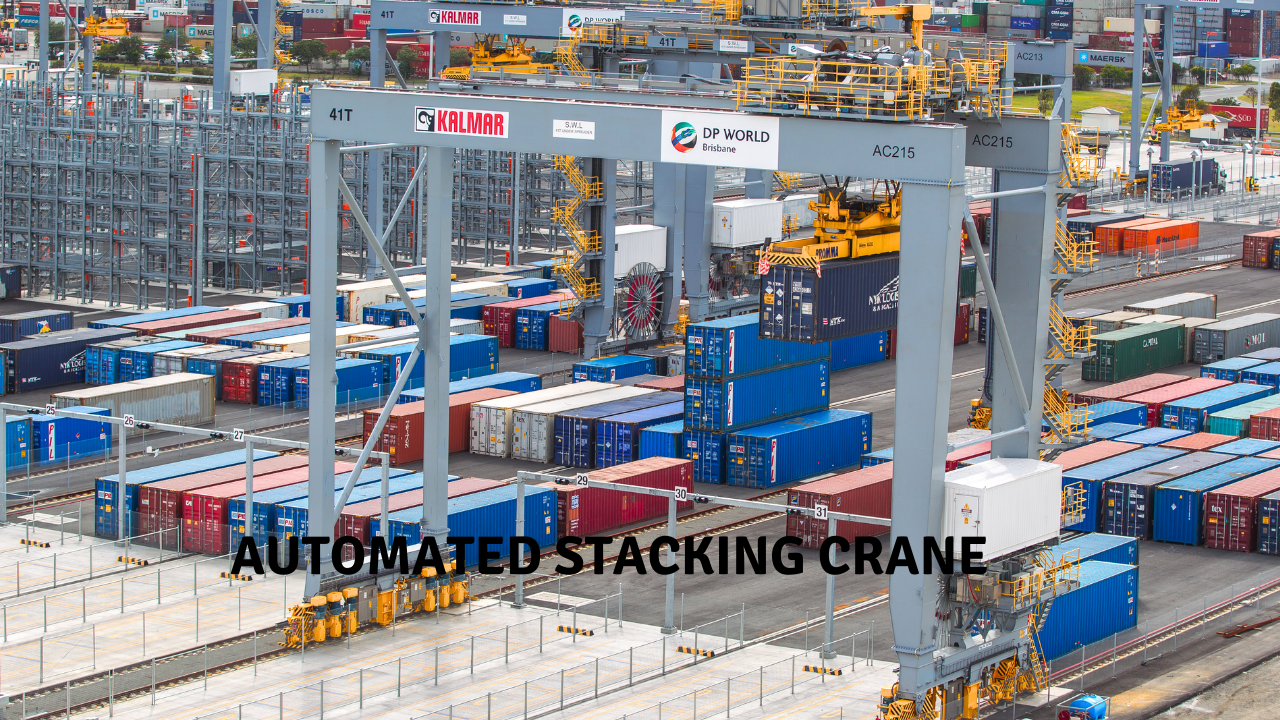
Rail-mounted gantry cranes are often seen in container terminals. They handle large shipping containers and operate across wide areas, making them ideal for port operations.
Each type is tailored to meet specific operational needs, ensuring flexibility and scalability.
Applications in Modern Industry
The automated stacking crane has found applications across multiple industries. In container ports, it plays a crucial role in stacking and retrieving shipping containers efficiently. This reduces turnaround time for ships and improves port productivity.
In warehouses, it enables high-density storage, allowing businesses to store more goods in less space. This is particularly beneficial in urban areas where space is limited.
Manufacturing facilities use these cranes to streamline material handling processes, ensuring that raw materials and finished goods are moved quickly and accurately.
E-commerce companies rely heavily on automation to handle large volumes of orders, and the automated stacking crane is a key component in their logistics infrastructure.
Key Features
One of the standout features of an automated stacking crane is its ability to operate continuously without fatigue. It can run 24/7, ensuring maximum productivity.
Precision is another major advantage. The system can position loads with millimeter accuracy, reducing errors and improving inventory management.
Real-time tracking allows businesses to monitor operations and inventory levels instantly. This enhances decision-making and reduces delays.
The system is also designed with safety in mind. Advanced sensors and control mechanisms minimize the risk of accidents, creating a safer working environment.
Benefits for Businesses
The adoption of an automated stacking crane offers numerous benefits. One of the most significant is increased efficiency. Tasks that once required multiple workers can now be completed in seconds.
Cost reduction is another major advantage. While the initial investment may be high, the long-term savings in labor and operational costs are substantial.
Accuracy is greatly improved, reducing the chances of misplaced or damaged goods. This leads to better customer satisfaction and fewer returns.
Space utilization is optimized, allowing businesses to maximize storage capacity without expanding their facilities.
Challenges and Considerations
Despite its advantages, implementing an automated stacking crane comes with challenges. The initial cost can be a barrier for small businesses. Proper planning and investment are required to ensure a successful setup.
Maintenance and technical expertise are also important. The system relies on advanced technology, which requires skilled personnel for operation and troubleshooting.
Integration with existing systems can be complex. Businesses need to ensure compatibility with their current infrastructure to achieve seamless operation.
Technology Behind the System
The performance of an automated stacking crane is driven by advanced technologies. Programmable logic controllers (PLCs) manage operations, while sensors provide real-time data for accurate positioning.
Software systems play a critical role in coordinating tasks and optimizing workflows. Artificial intelligence and machine learning are increasingly being integrated to enhance efficiency and predictive maintenance.
Communication systems ensure smooth interaction between different components, creating a synchronized and efficient operation.
Future Trends
The future of the automated stacking crane is closely tied to advancements in automation and digitalization. As industries move toward smart factories and intelligent logistics, these systems will become even more advanced.
Predictive maintenance will allow businesses to identify issues before they occur, reducing downtime. Integration with IoT devices will provide deeper insights into operations.
Autonomous decision-making capabilities may further enhance efficiency, allowing systems to adapt to changing conditions without human intervention.
Human Touch vs Automation
While automation is transforming industries, the human element remains important. The automated stacking crane reduces manual labor but does not eliminate the need for human oversight.
Skilled professionals are required to design, manage, and maintain these systems. This creates new opportunities in technical and engineering fields.
Rather than replacing humans, automation is reshaping roles and improving working conditions by eliminating repetitive and physically demanding tasks.
Clarifying Misconceptions
It is important to address a common misunderstanding. Unlike topics related to celebrities or public figures, an automated stacking crane does not have attributes like age, height, family, or net worth. Instead, its “profile” is defined by specifications such as load capacity, lifting height, speed, and operational efficiency.
These technical characteristics are what determine its performance and suitability for different applications.
Conclusion
The automated stacking crane stands as a powerful symbol of modern industrial innovation. By combining precision, efficiency, and advanced technology, it has transformed the way goods are handled and stored.
Businesses that adopt this system gain a competitive edge through faster operations, reduced costs, and improved accuracy. As technology continues to evolve, the role of automation in logistics will only become more significant.
For companies looking to future-proof their operations, investing in an automated stacking crane is not just an option—it is a strategic move toward smarter and more efficient logistics.
FAQs
Q: What is an automated stacking crane used for?
A: It is used for automatically storing and retrieving goods in warehouses and container terminals.
Q: How does an automated stacking crane improve efficiency?
A: It performs tasks faster and more accurately than manual systems, operating continuously without breaks.
Q: Is an automated stacking crane expensive?
A: Yes, the initial cost is high, but it offers long-term savings through reduced labor and improved productivity.
Q: Where is an automated stacking crane commonly used?
A: It is widely used in warehouses, manufacturing plants, and shipping ports.
Q: Can small businesses use automated stacking cranes?
A: It is possible, but due to cost and complexity, they are more commonly used by medium to large-scale operations.

