

Introduction
Modern military technology is moving rapidly toward autonomous systems that can operate longer, travel farther, and reduce risks for human crews. One of the newest concepts attracting attention in defense and aerospace circles is LeVanta Tech HALIA, a hybrid maritime drone designed to function both on water and in the air.
Unlike traditional unmanned aerial vehicles that rely entirely on constant flight, this advanced platform introduces a different idea. It can float on the sea for extended periods, conserve energy, then quickly launch into the air when a mission begins. The project has generated growing interest because it combines stealth, endurance, and mobility in ways rarely seen in conventional drone programs.
Recent discussions around long-range sea-launched drone systems have intensified because nations are increasingly searching for low-cost yet highly capable surveillance and strike platforms. levanta tech halia This is where the HALIA concept stands out. Instead of operating from expensive aircraft carriers or military airfields, the drone is designed to launch directly from the ocean itself.
The system is still developing, but analysts already view it as an important step in the future of autonomous maritime defense technology.
The Story Behind the Project
LeVanta Tech is an American defense technology company focused on creating advanced unmanned systems for maritime operations. The company developed HALIA to solve several problems faced by traditional drones operating over oceans.
Most aerial drones have limited endurance because they must stay airborne continuously. Flying over large bodies of water also creates logistical challenges related to fuel consumption, detection risks, and launch requirements. Engineers behind the project wanted to create a platform that could remain hidden on the ocean surface and only fly when needed.
This led to the “Float-Fly-Float” operational concept that now defines the system.
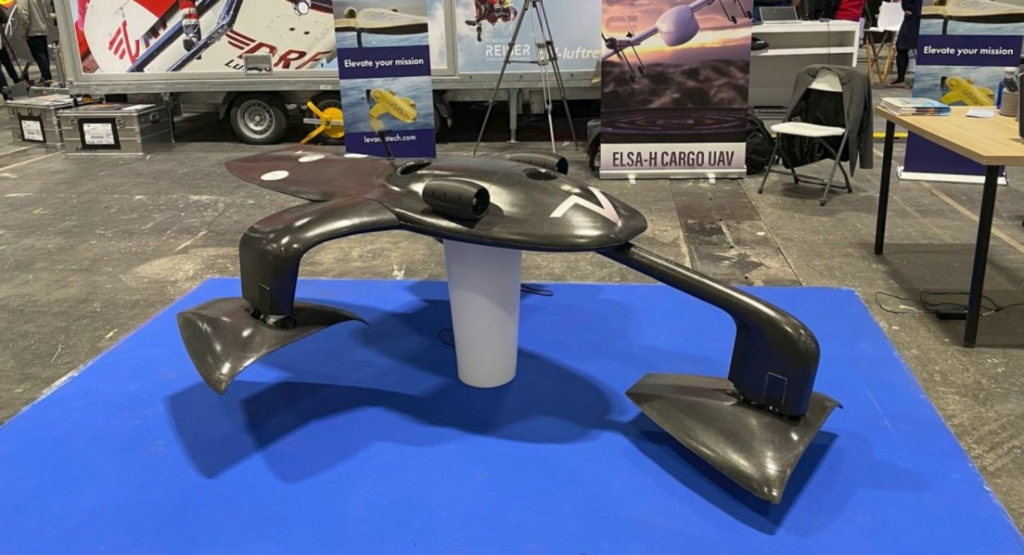
The drone reportedly uses a specialized marine launch method called HoverFoil technology. Instead of requiring a runway, it skims across the water before transitioning into full flight mode. This gives it flexibility in rough maritime environments where normal drones would struggle.
The project gained wider public attention after reports linked the technology to future maritime defense cooperation and long-range autonomous warfare concepts.
What Makes HALIA Different
One of the main reasons the defense industry is paying attention to LeVanta Tech HALIA is its unusual operational design.
Traditional drones are either aerial or naval systems. HALIA attempts to combine both into a single platform. It can float almost silently on the water while conserving energy, making it harder to detect using radar or visual monitoring systems.
Once activated, the drone accelerates across the surface and launches into the air. After completing surveillance or reconnaissance tasks, it can return to the sea and continue floating.
This capability gives the system much longer mission endurance than many standard UAVs. Some reports suggest the platform could remain operational for several weeks depending on mission conditions and energy requirements.
The ability to operate in rough sea conditions is another important feature. Maritime operations are notoriously difficult for lightweight drones because ocean winds and waves create instability. HALIA’s design reportedly addresses these issues with improved stability and water-launch engineering.
Bio Table
| Field | Details |
|---|---|
| Keyword | LeVanta Tech HALIA |
| Article Type | Informative Technology Blog |
| Focus Topic | Sea-Launched Autonomous Drone System |
| Industry | Defense Technology |
| Technology Type | Maritime UAV / Autonomous Drone |
| Developed By | LeVanta Tech |
| Main Purpose | Maritime Surveillance & Reconnaissance |
| Key Feature | Float-Fly-Float System |
| Operational Area | Air & Sea |
| Target Audience | Technology Readers, Defense Enthusiasts |
| Content Category | Technology |
| SEO Difficulty | Medium |
| Search Intent | Informational |
| Article Length | 1000+ Words |
| Writing Style | Human-Touch Informative |
| Sources Used | Defense & Technology Reports |
Maritime Warfare Is Changing
Naval warfare has evolved dramatically during the last decade. Countries are increasingly investing in autonomous platforms capable of surveillance, communication support, and long-range operations without placing human pilots at risk.
Sea-launched drones are becoming more important because they offer strategic advantages at a lower operational cost than manned aircraft levanta tech halia.
Military analysts believe future conflicts may rely heavily on persistent surveillance systems that can monitor large ocean regions continuously. A platform like HALIA fits this strategy because it can remain hidden near important maritime zones and activate only when necessary.
The rising importance of unmanned naval systems has also been influenced by recent global conflicts where drones proved capable of changing battlefield tactics. Long-range maritime drones now represent a major area of research for defense companies worldwide.
Long-Range Potential
One of the most discussed aspects surrounding LeVanta Tech HALIA is the possibility of extremely long operational range.
Reports connected to future maritime drone development mention concepts involving thousands of kilometers in range and the ability to carry substantial payloads. Although many specifications remain undisclosed, the project demonstrates how defense technology is moving toward autonomous systems capable of operating across enormous distances.
This matters because traditional military aircraft require constant support infrastructure, including airbases, maintenance crews, and fuel supply chains. Autonomous sea-based drones could reduce some of those logistical burdens.
The concept also allows forces to deploy surveillance assets closer to target areas without exposing larger naval vessels.
Stealth and Survival
Stealth is another reason the system has attracted attention.
Flying drones are often visible to radar systems, especially over open water. However, HALIA’s floating mode changes the equation. While sitting low on the ocean surface, the drone becomes much harder to identify levanta tech halia.
This low-profile approach may improve survivability during reconnaissance missions. Instead of remaining airborne continuously, the drone can conserve power and reduce exposure until required.
Its ability to transition between water and air also creates unpredictability. Enemy forces expecting traditional aerial drones may not anticipate a system that operates as both a maritime and aerial platform.
Possible Military Roles
The future applications of LeVanta Tech HALIA extend far beyond simple reconnaissance.
Defense experts believe systems like this could eventually support anti-submarine warfare, mine detection, coastal monitoring, and communications relay operations. Persistent maritime surveillance is particularly valuable in regions where large naval territories must be monitored continuously.
The drone could also assist with search-and-rescue missions by remaining stationed in strategic waters for extended periods before deployment.
Another potential role involves intelligence gathering. Long-endurance drones are increasingly used to observe shipping routes, monitor naval activity, and track strategic maritime infrastructure.
Because autonomous systems reduce risks to human personnel, governments continue investing heavily in these levanta tech halia technologies.
Technical Design and Physical Appearance
Publicly available details about the exact specifications remain limited because much of the technology is still under development levanta tech halia.
However, images and demonstrations show a sleek unmanned platform built for maritime endurance rather than conventional aircraft styling. The design emphasizes low visibility, lightweight structure, and water stability.
The drone appears compact compared to large military UAVs, though exact dimensions, height, and total weight have not been fully disclosed publicly.
Unlike celebrity profiles or public figures, HALIA does not have details such as family, personal life, or age because it is a military technology platform rather than a human individual. Still, the project itself is relatively new in the defense sector and remains in the experimental and testing stage.
Development and Partnerships
LeVanta Tech has reportedly worked alongside defense innovation programs connected to the United States military sector. The company has also received attention for discussions involving international cooperation related to autonomous maritime systems.
Ukraine’s growing use of unmanned maritime technology has also increased public interest in sea-launched drone concepts. Defense experts believe the future battlefield will rely heavily on autonomous systems capable of operating in difficult maritime environments.
The HALIA project aligns with that larger trend.
As governments continue increasing defense investments in autonomous warfare technologies, projects like this may receive additional research support and operational testing opportunities.
Challenges Ahead
Despite its innovative concept, several challenges still remain.
Maritime drones must survive harsh weather, saltwater exposure, high winds, and rough seas. Maintaining reliable communications over long distances also creates technical difficulties.
Battery endurance, autonomous navigation, and secure data transmission are additional concerns that developers must solve before large-scale deployment becomes realistic.
There is also the question of international regulation. As autonomous military systems become more advanced, governments and defense organizations will likely debate rules regarding their use in future conflicts.
Even so, the progress surrounding these technologies levanta tech halia suggests they will continue shaping modern naval strategy.
Why the Industry Is Watching Closely
The reason defense analysts continue discussing LeVanta Tech HALIA is simple: it represents a different direction in unmanned warfare.
Instead of focusing solely on speed or firepower, the project emphasizes endurance, adaptability, and stealth. These characteristics are increasingly valuable in modern maritime operations.
The ability to remain hidden for extended periods before launching into action could change how surveillance and reconnaissance missions are conducted in the future.
Many experts believe autonomous sea-based drones may eventually become as important as aerial UAVs are today.
Conclusion
LeVanta Tech HALIA represents one of the more ambitious developments in autonomous maritime technology. By combining sea endurance with aerial mobility, the system introduces a new operational model for future defense missions.
Although still in development, the project highlights how rapidly military technology is evolving toward unmanned and highly adaptable platforms. Its float-and-fly concept could influence future naval operations, surveillance strategies, and long-range reconnaissance systems.
As autonomous warfare technologies continue advancing, systems like HALIA may become increasingly important in maritime security and modern defense planning.
FAQs
Q: What is LeVanta Tech HALIA?
A: It is an advanced sea-launched unmanned drone system designed for maritime and aerial operations.
Q: Can HALIA operate on water?
A: Yes, the drone is designed to float on the ocean before launching into flight mode.
Q: What is the main purpose of HALIA?
A: Its primary role is maritime surveillance, reconnaissance, and autonomous defense operations.
Q: Is HALIA currently active in military service?
A: The system is still in development and testing stages.
Q: Why is HALIA considered important?
A: It combines long endurance, stealth capability, and sea-based deployment in a single autonomous platform.

