

Introduction
In today’s digital world, people expect fast internet, smooth video calls, instant cloud access, and reliable mobile coverage everywhere they go. Behind all these services lies a powerful communication system that most users never notice. One of the most important parts of that system is backhaul network technology.
Whether someone is streaming videos on a smartphone, using smart city applications, or connecting through a 5G network, data must travel through several layers of infrastructure before reaching its destination. Backhaul systems make this possible by carrying data traffic from local access points to the central network infrastructure.
As telecommunications continue to expand globally, companies are investing heavily in stronger and faster network transport systems. Modern wireless communication, enterprise networking, and next-generation internet services depend greatly on efficient backhaul solutions.
Understanding Backhaul Networks
The term backhaul network technology refers to the systems and communication links that transport data between edge networks and the core network. In mobile communication, it connects cell towers and radio stations to the central telecom infrastructure. In broadband internet services, it links local providers to high-capacity backbone networks.
A simple way to understand backhaul is to think of it as a highway for digital traffic. Devices such as smartphones and laptops connect to nearby access points, but the collected data still needs a path to travel toward internet servers and cloud platforms. Backhaul provides that path.
Without efficient transport networks, even the most advanced wireless systems would struggle to deliver stable performance.
Why Backhaul Matters in Modern Communication
As internet usage grows every year, communication providers face increasing pressure to manage massive amounts of data traffic. Streaming services, online gaming, cloud computing, and remote work environments require strong network infrastructure.
This is where backhaul network technology becomes essential. It helps reduce congestion, improves network reliability, and supports high-speed communication between users and internet services.
Telecommunication companies also rely on these systems to expand mobile coverage into urban and rural areas. Faster backhaul connections allow operators to provide smoother voice calls, quicker downloads, and better customer experiences.
The rise of connected devices and IoT applications has further increased the importance of reliable network transport systems.
Bio Table
| Field | Details |
|---|---|
| Topic | Backhaul Network Technology |
| Category | Technology |
| Article Type | Informative Blog Post |
| Focus Keyword | backhaul network technology |
| SEO Goal | Improve search visibility for telecom and networking topics |
| Target Audience | Telecom professionals, IT students, businesses, tech readers |
| Content Style | Human-written, informative, professional |
| Word Count | 1000+ Words |
| Keyword Usage | 10–15 Times Naturally |
| Main Topics Covered | Fiber optics, microwave links, 5G, satellite backhaul, enterprise networking |
| Reading Level | Easy to Understand |
| Search Intent | Informational |
| Suitable For | Tech blogs, telecom websites, networking platforms |
How Backhaul Systems Work
When a user opens a website or sends a message from a smartphone, the request first reaches a nearby cell tower or Wi-Fi access point. From there, the information is transferred through the backhaul infrastructure toward the core network.
The core network then routes the request to its destination, whether that is a cloud server, streaming platform, or another user. Once the information is processed, the response travels back through the same network path.
This entire process happens within milliseconds, allowing people to browse websites, watch videos, and communicate in real time.
The speed and quality of this connection depend heavily on the capacity of the backhaul infrastructure.
Fiber Optic Backhaul
Fiber optics have become one of the most reliable solutions in modern backhaul network technology. These systems use light signals to transfer data at extremely high speeds over long distances.
Fiber connections are widely used in large cities and advanced telecom environments because they offer low latency and enormous bandwidth capacity. They are especially important for 5G deployment, where network traffic is significantly higher than previous generations.
Another major advantage of fiber systems is stability. Unlike wireless signals, fiber cables are less affected by weather conditions and electromagnetic interference.
However, installation costs can be high because underground cables and specialized infrastructure are required. Despite this challenge, many telecom providers continue investing in fiber expansion due to its long-term performance benefits.
Microwave Backhaul Technology
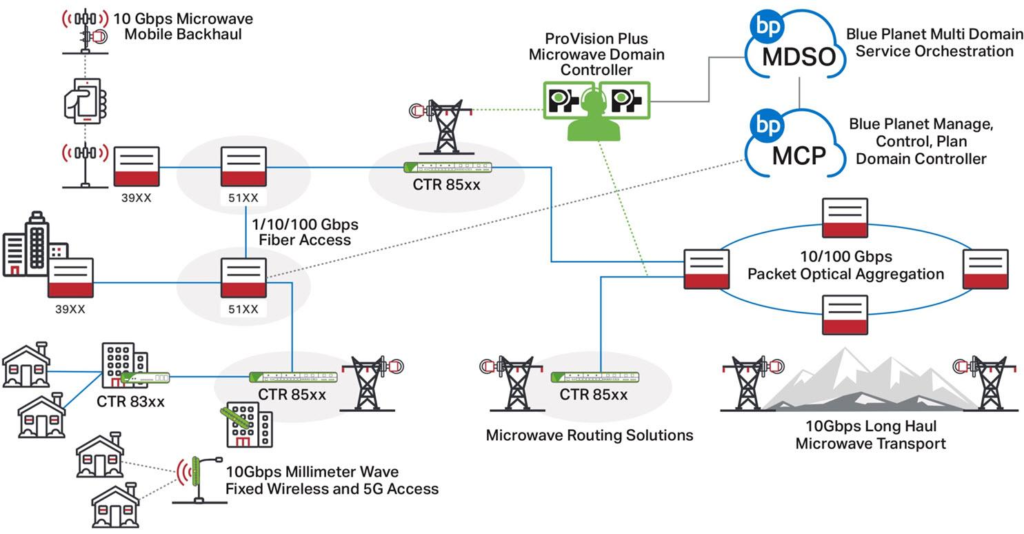
In areas where fiber deployment is difficult or expensive, microwave systems provide an alternative solution. These networks use radio signals to transmit data wirelessly between communication towers.
Microwave links are commonly used in remote locations, mountainous regions, and developing areas where laying fiber cables is not practical.
One reason operators prefer microwave systems is their faster deployment speed. A wireless link can often be installed much quicker than a full fiber network.
Although microwave systems are highly useful, they generally offer lower bandwidth compared to fiber optics. Heavy rain and environmental conditions may also affect signal quality.
Even with these limitations, microwave communication remains a valuable part of global telecom infrastructure.
Satellite-Based Backhaul
Satellite communication is another important area of backhaul network technology, especially in regions with limited terrestrial infrastructure.
Remote islands, deserts, offshore platforms, and disaster recovery zones often rely on satellite systems for internet and communication services.
Modern satellite technology has improved significantly over the years. New low-earth orbit satellite systems are helping reduce latency and improve coverage worldwide.
While satellite communication offers broad geographic reach, operational costs are usually higher compared to fiber and microwave systems. Bandwidth availability can also be limited depending on network demand.
Still, satellite backhaul continues to play a critical role in connecting underserved areas around the world.
The Role of Backhaul in 5G Networks
The growth of 5G has transformed the importance of network transport infrastructure. Unlike earlier mobile generations, 5G handles massive data volumes and supports ultra-low latency communication.
To meet these requirements, operators need advanced backhaul network technology capable of carrying large amounts of traffic without delays.
5G networks use many small cells placed close together in urban environments. Each of these cells must connect back to the telecom core using high-speed transport systems.
Fiber optics are considered the preferred solution for 5G deployment because of their speed and reliability. In locations where fiber is unavailable, advanced microwave systems are often used.
Without strong backhaul infrastructure, the full potential of 5G cannot be achieved.
Enterprise and Business Applications
Businesses also depend heavily on reliable network transport systems. Large organizations with multiple branch offices require secure and stable communication between locations.
Financial institutions, healthcare providers, logistics companies, and cloud service providers all use advanced networking infrastructure to support daily operations.
Modern enterprises increasingly rely on cloud computing, video conferencing, and real-time collaboration tools. These applications require low latency and stable connectivity, making high-performance backhaul systems extremely important.
As digital transformation continues across industries, demand for stronger enterprise networking solutions is expected to grow.
Challenges Facing Backhaul Infrastructure
Despite its importance, backhaul network technology faces several operational challenges.
One major issue is the cost of infrastructure deployment. Installing fiber cables, upgrading towers, and maintaining equipment require significant investment.
Another challenge is growing network congestion. As more devices connect to the internet, telecom providers must continuously increase capacity to avoid performance slowdowns.
Cybersecurity is also becoming more important. Communication infrastructure can become a target for cyberattacks, making network protection a top priority for service providers.
Rural connectivity remains another challenge in many countries where infrastructure development is limited.
Future of Backhaul Technology
The future of communication networks will depend greatly on continued innovation in transport infrastructure. Technologies such as artificial intelligence, edge computing, and smart automation are expected to improve network management and efficiency.
The expansion of smart cities and IoT devices will also increase the need for faster and more reliable connectivity.
Future developments in backhaul network technology may include higher-capacity wireless systems, improved satellite communication, and more energy-efficient networking solutions.
As internet traffic continues to rise worldwide, telecom companies will likely invest even more in scalable and intelligent network infrastructure.
Conclusion
Modern communication systems rely on strong and efficient network infrastructure to deliver fast and stable digital services. From mobile communication and cloud computing to smart cities and enterprise operations, backhaul systems support the movement of massive amounts of data every second.
As 5G networks continue expanding and global internet usage increases, the importance of backhaul network technology will become even greater. Fiber optics, microwave communication, and satellite systems each play an important role in maintaining modern connectivity.
Although most users never see this infrastructure directly, it remains one of the most critical foundations of today’s connected world.
FAQs
Q: What is backhaul network technology?
A: It is the infrastructure that carries data between local access networks and the main core network.
Q: Why is backhaul important for 5G?
A: 5G requires high-speed and low-latency connections, which depend on strong backhaul systems.
Q: Which backhaul method is the fastest?
A: Fiber optic backhaul is generally considered the fastest and most reliable solution.
Q: Can wireless systems be used for backhaul?
A: Yes, microwave and satellite communication are commonly used wireless backhaul solutions.
Q: What industries use backhaul networks?
A: Telecommunications, healthcare, banking, transportation, cloud services, and smart city projects all rely on backhaul infrastructure.

