

Introduction
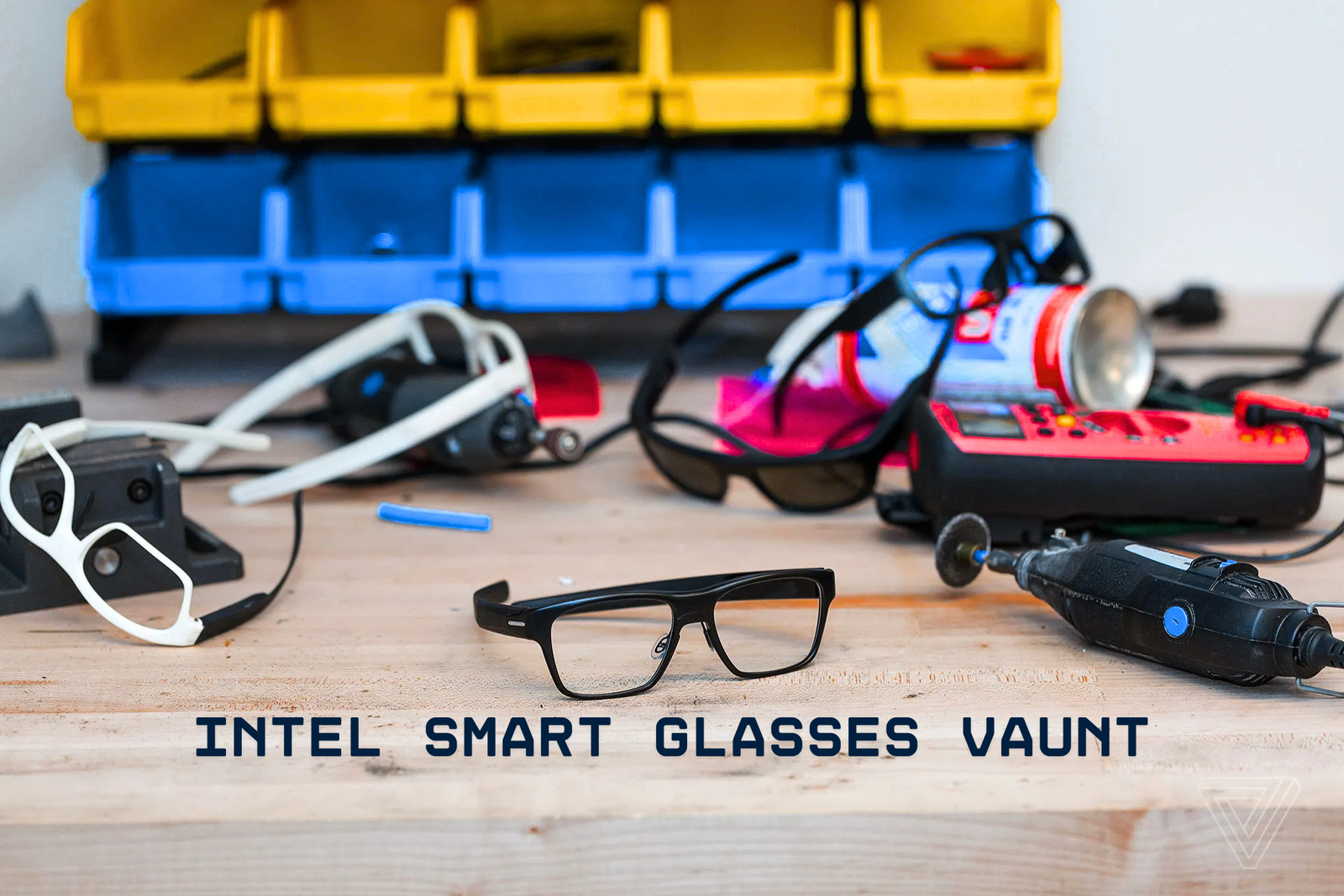
The story of Intel Smart Glasses Vaunt is one of the most fascinating yet underrated chapters in modern wearable technology. In a world where smart devices are becoming more powerful and visually complex, this project took a completely different approach. Instead of building bulky augmented reality headsets, Intel Smart Glasses Vaunt focused on simplicity, comfort, and subtle digital interaction in everyday life.
When it was first introduced in 2018, Intel Smart Glasses Vaunt immediately attracted attention because it looked like ordinary eyeglasses. There were no visible cameras or flashy components, only a clean and minimal design. The goal was to create a device that blends into daily life while quietly delivering useful information such as notifications and alerts.
Concept and Vision
The concept behind Intel Smart Glasses Vaunt was built on the idea of invisible computing. Intel wanted to reduce the gap between humans and digital information by making technology less distracting and more natural. Instead of fully immersive augmented reality, the focus was on small, context-based information that appears only when needed.
What made Intel Smart Glasses Vaunt unique was its effort to avoid turning glasses into a “tech gadget.” The design philosophy was centered on normalcy. Users could wear the device in public without feeling uncomfortable or attracting unnecessary attention, which was a major problem in earlier smart eyewear attempts.
Design and Appearance
One of the most impressive aspects of Intel Smart Glasses Vaunt was its physical design. At first glance, it looked like a pair of simple, lightweight glasses that anyone might wear daily. Intel intentionally avoided futuristic styling to ensure the device would be socially acceptable in real-world environments.
Inside the arms of the glasses, Intel Smart Glasses Vaunt contained hidden micro-optical systems that enabled information projection directly into the user’s eye. This made the device feel almost invisible from the outside while still offering a digital layer of interaction for the wearer.
Intel Smart Glasses Vaunt – Bio Table
| Field | Details |
|---|---|
| Name | Intel Smart Glasses Vaunt |
| Type | Smart Glasses Prototype |
| Developer | Intel Corporation |
| Announcement Year | 2018 |
| Status | Discontinued (Prototype only) |
| Purpose | Display simple notifications using AR-style retinal projection |
| Display Technology | Low-power laser retinal projection system |
| Camera | Not included (privacy-focused design) |
| Connectivity | Bluetooth (smartphone-based) |
| Key Features | Notifications, calls, reminders, subtle AR display |
| Design Style | Lightweight, normal-looking eyeglasses |
| Weight | Approx. under 50 grams |
| Market Release | Never commercially launched |
| Reason for Cancellation | Technical limits + market uncertainty |
| Legacy | Influenced modern lightweight AR smart glasses concepts |
Technology and Working System
The core innovation behind Intel Smart Glasses Vaunt was its retinal projection technology. Instead of using a traditional screen, it used a low-power laser system to project images directly onto the retina. This created a unique experience where notifications appeared as if they were floating in the user’s vision.
The system inside Intel Smart Glasses Vaunt used a combination of lasers, mirrors, and optical layers to control light projection. While this technology was highly advanced, it also had limitations such as a narrow viewing angle and restricted brightness levels, which affected overall usability.
Features and Functionality
The functionality of Intel Smart Glasses Vaunt was designed to be simple and focused on everyday needs. It was not meant to replace smartphones but to act as a companion device. Users could receive notifications such as messages, calls, and reminders directly in their field of view.
In addition, Intel Smart Glasses Vaunt connected to smartphones through Bluetooth, relying on them for processing power and data handling. This kept the glasses lightweight but also limited their ability to function independently as a full AR system.
User Experience and Interaction
The user experience of Intel Smart Glasses Vaunt was built around subtlety. Notifications appeared gently in the peripheral vision, allowing users to stay aware of their surroundings while receiving important updates. This made the experience feel less intrusive compared to smartphones or smartwatches.
However, Intel Smart Glasses Vaunt also had usability challenges. Because the display was designed to be subtle, users sometimes needed to adjust their eye position to clearly view the information. This made the experience slightly inconsistent in certain situations.
Privacy and Safety Approach
One of the strongest advantages of Intel Smart Glasses Vaunt was its privacy-first design. Unlike earlier smart glasses that included cameras and raised surveillance concerns, this device completely removed any recording capabilities.
By eliminating cameras, Intel Smart Glasses Vaunt became more socially acceptable and reduced privacy fears in public spaces. This design decision played a major role in making the concept feel safer and more respectful toward user privacy compared to other wearable devices of its time.
Challenges and Market Issues
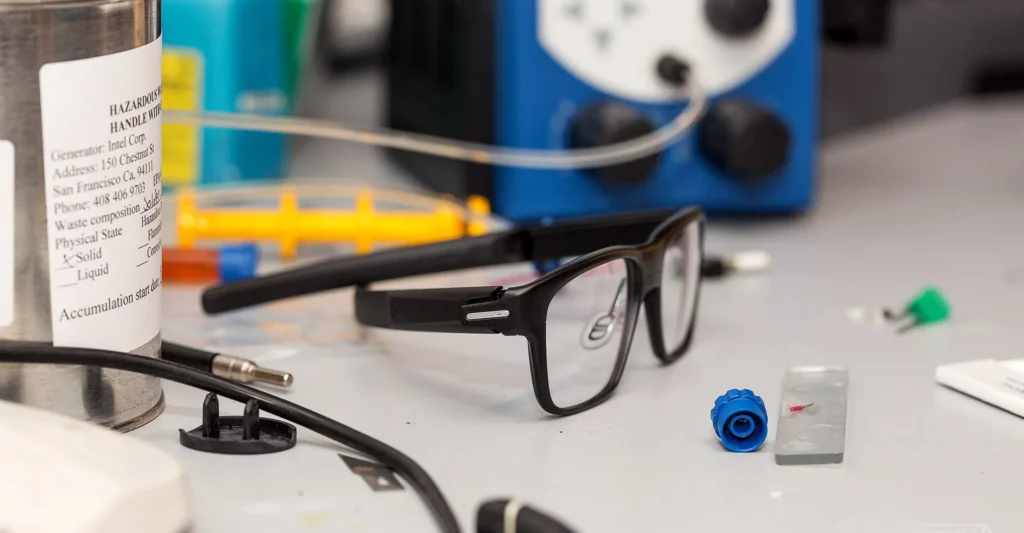
Despite its innovation, Intel Smart Glasses Vaunt faced several challenges that prevented it from reaching commercial production. One of the main issues was its limited display system, which only supported simple red visuals and could not deliver rich multimedia content.
Another challenge for Intel Smart Glasses Vaunt was its narrow viewing angle, which required precise positioning for clear visibility. Combined with uncertain market demand for smart glasses at the time, these limitations made it difficult for the product to move beyond the prototype stage.
Discontinuation and Legacy
Eventually, Intel decided to discontinue Intel Smart Glasses Vaunt in 2018. The decision was influenced by technical constraints, shifting company priorities, and unclear consumer interest in wearable AR devices.
Even though Intel Smart Glasses Vaunt never reached the market, its design ideas continue to influence modern smart eyewear. Many current AR and AI glasses still follow similar principles of lightweight design, privacy focus, and subtle information display.
Final Thoughts
The story of Intel Smart Glasses Vaunt shows how innovation does not always need commercial success to be meaningful. It introduced a vision of wearable technology that was simple, private, and deeply integrated into everyday life.
Even today, the ideas behind Intel Smart Glasses Vaunt continue to inspire developers and companies working on the next generation of smart glasses. It remains a reminder that sometimes the most important technologies are the ones that quietly shape the future without ever reaching mass production.
FAQs
Q: What is Intel Smart Glasses Vaunt?
A: It is a prototype smart glasses project by Intel designed to show simple notifications using retinal projection technology.
Q: Did Intel Smart Glasses Vaunt launch commercially?
A: No, it was only a prototype and was canceled before reaching the market.
Q: How did Intel Smart Glasses Vaunt display information?
A: It used a low-power laser system to project images directly onto the user’s retina.
Q: Does Intel Smart Glasses Vaunt have a camera?
A: No, it was designed without a camera to protect user privacy.
Q: Why was Intel Smart Glasses Vaunt discontinued?
A: It was stopped due to technical limits, market uncertainty, and limited display capabilities.

